The Computer History Museum extends its sincere thanks to Seagate Technology for its recent donation of one petabyte of storage to help preserve our world’s digital legacy.
Through its exhibits and programs, CHM celebrates both the history and the future of computing. From the room-sized mainframes of the 1950s and 1960s to the smartphones we carry today, the Museum brings the story of computing to life.
Behind that seven-decade history, however, is another story—one that unfolds largely behind the scenes: the challenge of storage. How do we preserve the information these machines processed, generated, and made possible?
After many early experiments, the 1956 IBM RAMAC hard drive helped establish the model for modern disk-based storage. To document that evolution, CHM hosts a dedicated Storage Special Interest Group (SIG), and its permanent collection includes more than 150 hard drives from dozens of manufacturers, beginning with some of the earliest prototypes.
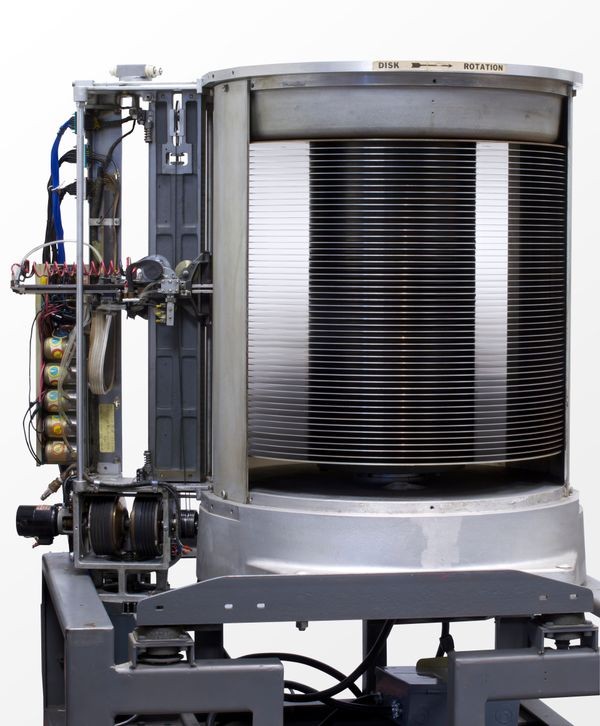
CHM preserves the computer storage story beginning with the very first hard drive: IBM’s 1956 RAMAC.
That history is not just on display—it is brought to life each week by knowledgeable volunteers who conduct the world’s only live demonstration of a RAMAC hard drive every Wednesday at the Museum.
On February 11, 2026, a critical shipment arrived at CHM. It wasn’t a vintage computer or a rare manuscript—it was the storage infrastructure needed to preserve those treasures for generations to come.
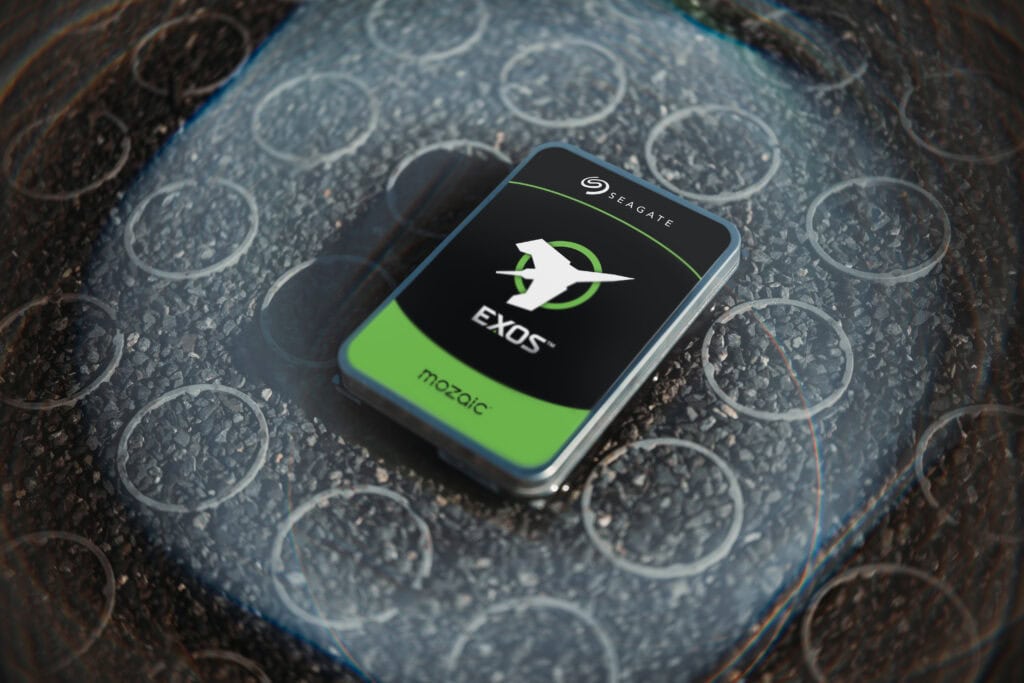
A Seagate 24TB Exos hard drive powered by Mozaic technology.
Through a generous donation, Seagate provided 24TB Exos hard drives powered by Mozaic technology, the breakthrough innovation redefining areal density and driving Seagate’s capacity leadership in the AI era. More than just hardware, these high-capacity drives represent the technology that helps safeguard history, unlock the enduring value of data, and ensure the past remains accessible in an increasingly digital world.
You might wonder why a museum dedicated to history needs a petabyte of modern storage. The answer lies in our massive digitization efforts. CHM currently manages nearly two linear miles of physical documentation that is being systematically digitized. Generous donors have funded these projects, allowing us to turn fragile paper and film into stable digital files.
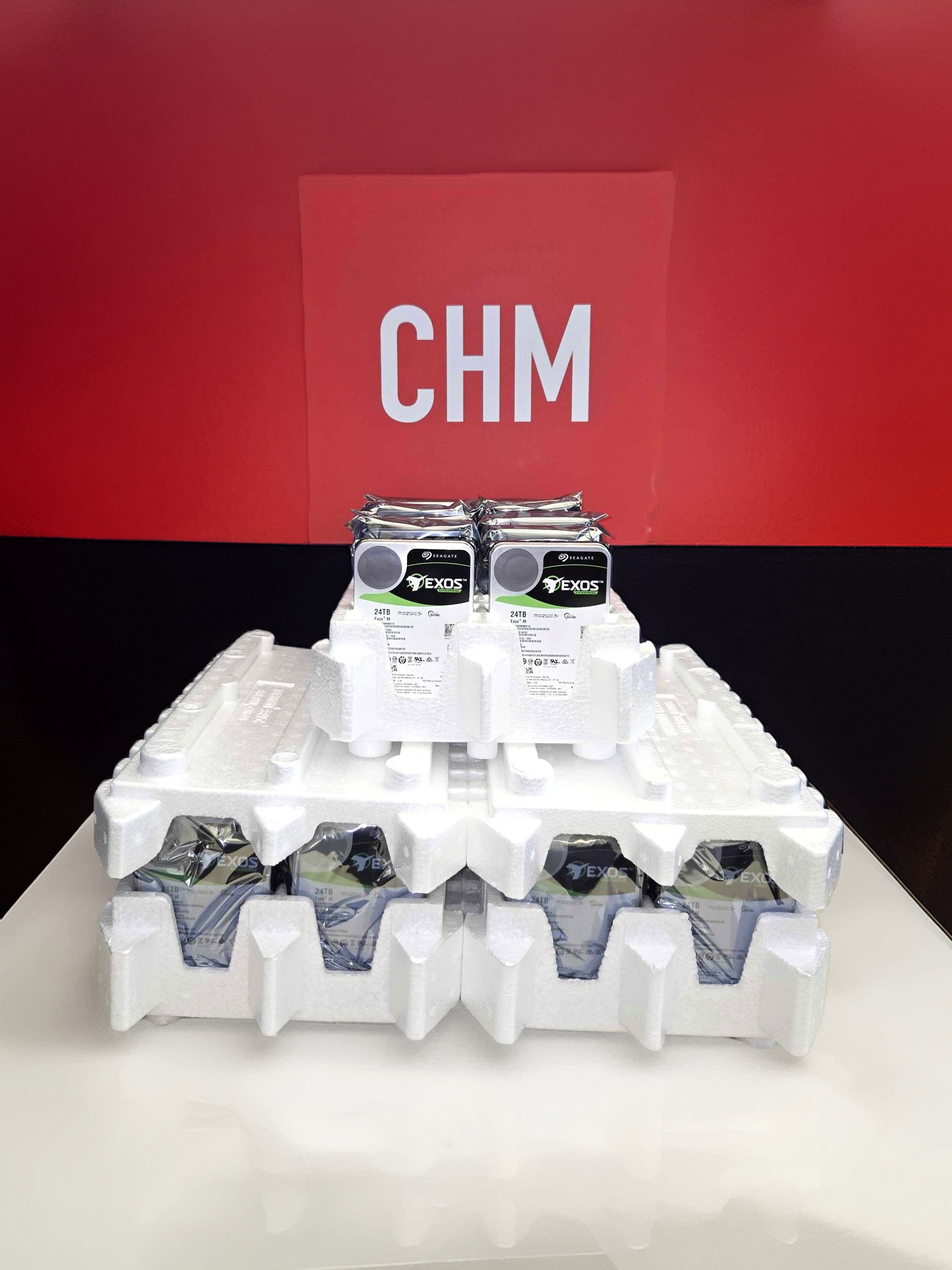
Soon-to-be-installed drives from the Seagate donation at CHM.
But digitization is only the beginning. Once a document or video is scanned, it enters CHM’s digital repository, where it must be stored, managed, and prepared for long-term access. German Mosquera, CHM’s Director of Technology Operations, explains that Seagate’s Exos drives are a key part of a major storage upgrade, supporting the server environment that handles the queues for CHM’s oral histories and other high-resolution video and media collections. This is one of the most active parts of the system—where data is staged, organized, and readied for ingestion before moving to its final destination and becoming accessible to the public.
As we move further into the 21st century, we face a growing threat often referred to as the Digital Dark Age: the risk that vital pieces of our digital cultural heritage could be lost as hardware ages, fails, or the software needed to access them becomes obsolete. Hard drives, like all physical infrastructure, have a finite lifespan and typically must be replaced every five years to ensure continued reliability and access.
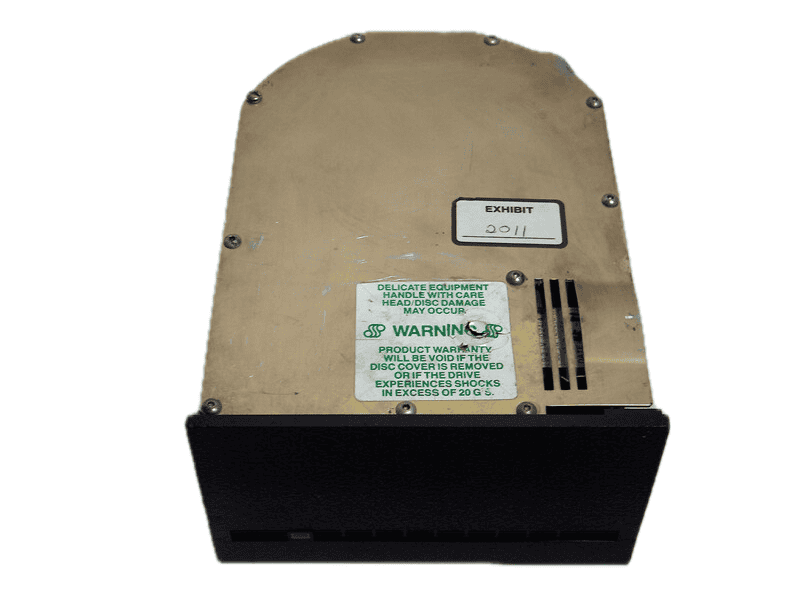
Introduced in 1980, the ST-506 was the first 5.25-inch hard disk drive. It was developed by Shugart Technology (now Seagate Technology) and was the first full-height 5.25-inch HDD designed for personal computers, a major milestone in storage history. CHM #102672976
Seagate’s donation helps CHM meet this challenge head-on in three critical ways:
All of this behind-the-scenes storage work serves a very public purpose. With the recent launch of OpenCHM—a digital portal featuring a new search engine and API—the Museum is expanding fine-grained access to its collections in powerful new ways. For a researcher in Nairobi or a student in Tokyo, the data stored on Seagate Exos drives helps make CHM’s collections discoverable, accessible, and usable from anywhere in the world.
Seagate has long championed the value of data—a theme that resonates deeply with CHM’s mission to decode technology for everyone. Data is more than ones and zeroes; it is the living record of human ingenuity and the technological breakthroughs that have shaped the past half-century. It includes extraordinary historical artifacts, from the source code used on the Apollo Guidance Computer that helped put humans on the Moon to some of the earliest sketches of the integrated circuit and microprocessor. It also includes more than 1,200 oral histories from pioneers in computing, storage, and semiconductors in CHM’s collection—the largest of its kind in the world. And that record continues to grow as we capture the voices of the people who helped invent our data-driven world.
As CHM looks toward 2030, its digital footprint will continue to expand. A dependable foundation of storage infrastructure means one less obstacle in the urgent work of preserving the digital record of our time.
To the team at Seagate: Thank you for being our partners in preservation. By helping provide the technology needed to store and safeguard these digital artifacts today, you are helping ensure that the story of computing—and the ways it has shaped every aspect of modern life—can be discovered, studied, and understood for generations to come.