With sadness we say goodbye to remarkable computing pioneer and 2018 CHM Fellow Dame Stephanie “Steve” Shirley.
Shirley, who passed away on August 9, 2025, at the age of 91, was born Vera Stephanie Buchthal in Dortmund, Germany, in 1933. She arrived in Britain as an unaccompanied child refugee on the Kindertransport, an effort by Jewish and Quaker organizations in response to the Kristallnacht pogrom in November 1938, which highlighted the escalating danger faced by Jews in Nazi Germany and Austria. (Some 10,000 unaccompanied children from Nazi-controlled territories were given refuge in Great Britain between 1938 and 1940). This experience profoundly shaped the young Vera, who, throughout her life would tell others that her motivation to try hard and dream big was because, “I wanted my life to have been worth saving.”
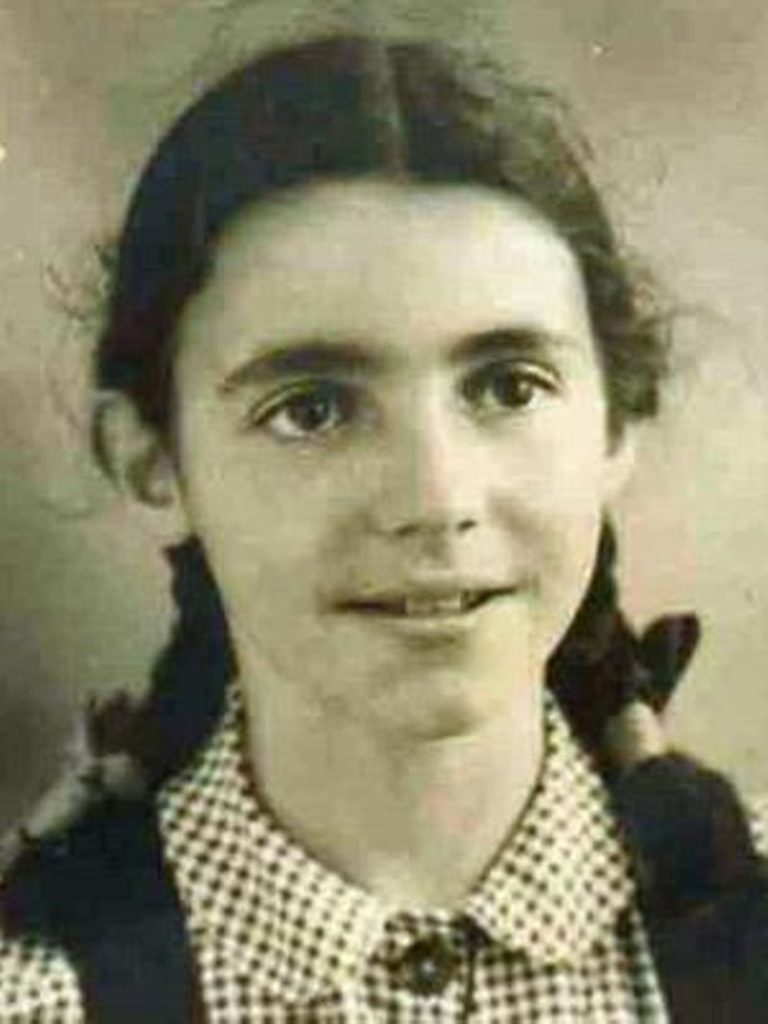
Vera Buchtal, or Stephanie Shirley, ca. 1940. Courtesy of Dame Stephanie Shirley.
On arriving in her new land, Vera settled in with foster parents in Little Aston in the Midlands. At Oswestry Girls’ High School, where mathematics was not offered to girls, she secured permission to study it at the neighboring boys’ school—an early sign of her determination to overcome discrimination, although one she would have to adapt to soon in the business world. Finding that her business letters were not being responded to, she began signing her name “Steve” (instead of Stephanie) and immediately got a much improved response.
In the 1950s, after graduating high school, Shirley worked at the Post Office Research Station at Dollis Hill, where World War II code-breaking machines had been built. Taking evening classes for six years, she obtained an honors degree in mathematics and married physicist Derek Shirley in 1962.
A true tech pioneer decades ahead of her time, with essentially just pocket change, “Steve” founded Freelance Programmers in 1962, later known as F International. In this era, when society often relegated women to the domestic sphere, she created a thriving, multi-million-dollar software business by employing mostly women and embracing remote, flexible work. She reimagined what the future of work could look like decades ahead of its time and gave vastly improved opportunities for women seeking to balance careers and home. Freelance Programmers (later Xansa) grew to 8,500 staff and a value of nearly $3 billion.
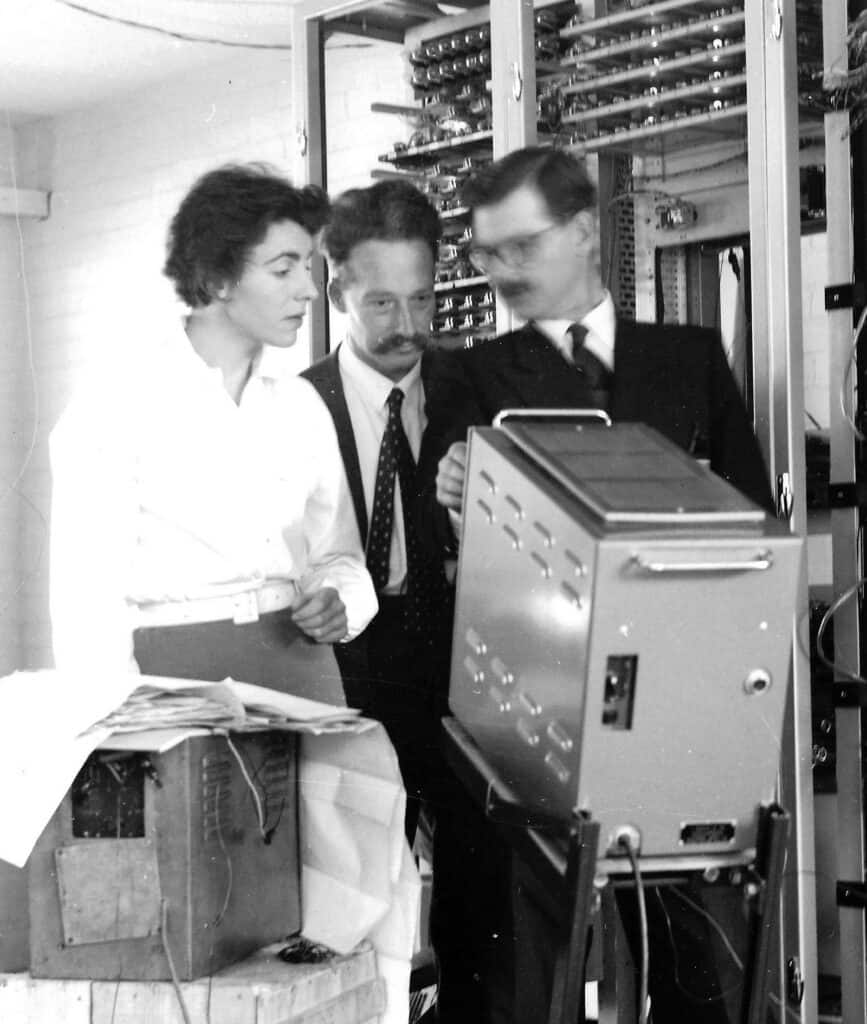
Shirley in front of ERNIE, together with the designer, Harry Fensom, ca. 1957. Courtesy of Dame Stephanie Shirley.
As Oxford professor and friend Sue Black remarks, “Her career began on some of the earliest British computers, including ERNIE, the Premium Bonds lottery computer. She didn’t just open doors for women in tech, she built the doors and handed out the keys." ERNIE stands for the Electronic Random Number Indicator Equipment and was a hardware random number generator created to find winners each month for the premium bond prize draw. The first ERNIE was built in 1956 by the Post Office Research Station at Dollis Hill by some of the same team of engineers who built Colossus, the famous WW II codebreaking computer. This was an important part of Shirley's post-graduate work at the Research Station.
Through the Shirley Foundation, Dame Stephanie Shirley gave away most of her personal fortune to causes including autism research, the arts, and computing heritage.
2018 CHM Fellow Dame Stephanie Shirley blog.
Oral history of Dame Stephanie Shirley. Read the transcript.
Fellow Award acceptance speech.