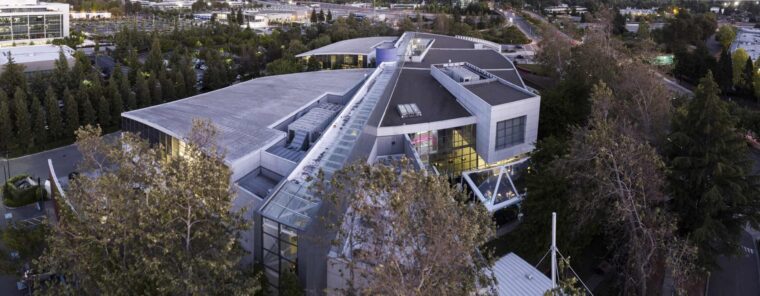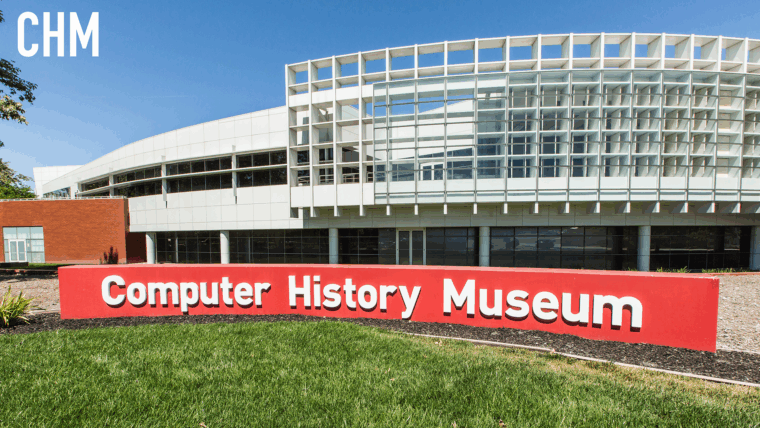

Long before it became the Computer History Museum, the building at 1401 N. Shoreline Boulevard in Mountain View, stood as a bold architectural statement about the future of Silicon Valley.
Explore the photos below and learn the story behind the building’s award-winning design, its famous first occupant, its reinvention as a museum, and even a hidden message coded into the lobby floor…
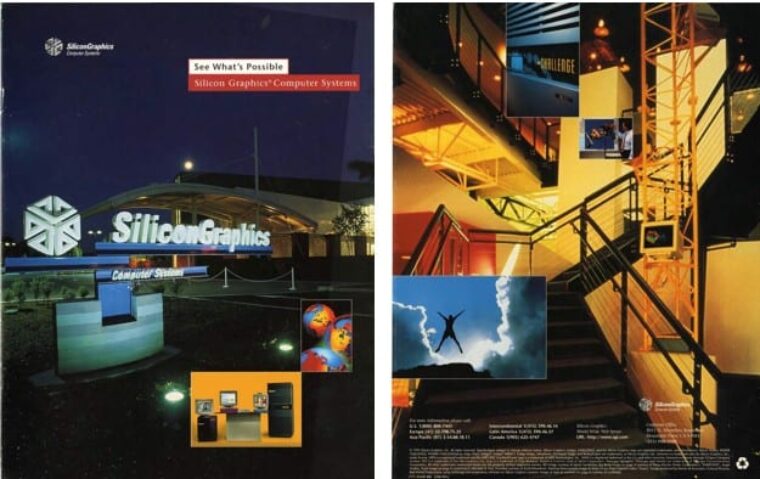
CHM’s building was originally the headquarters for powerhouse tech company Silicon Graphics, Inc. (SGI). Designed to be a bold statement of innovation, openness, and a break from Silicon Valley’s typical corporate offices, it earned significant architectural recognition. As SGI rose and later declined, the building remained a symbol of a transformative era in computing. Acquired by CHM in 2002, it now serves as a home for preserving computing history and a lasting artifact of Silicon Valley’s cycle of innovation and reinvention.
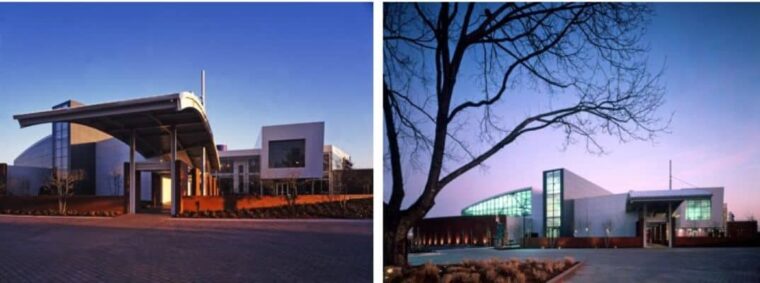
Completed in 1995 for Silicon Graphics, Inc. (SGI), the structure was conceived not as a typical corporate office, but as a visible, physical expression of a new kind of company, innovative, optimistic, and deeply engaged with the world around it.
At a time when much of Silicon Valley was defined by anonymous, reflective-glass office parks and “tilt-ups,” SGI wanted something radically different: a building with presence, identity, and meaning.
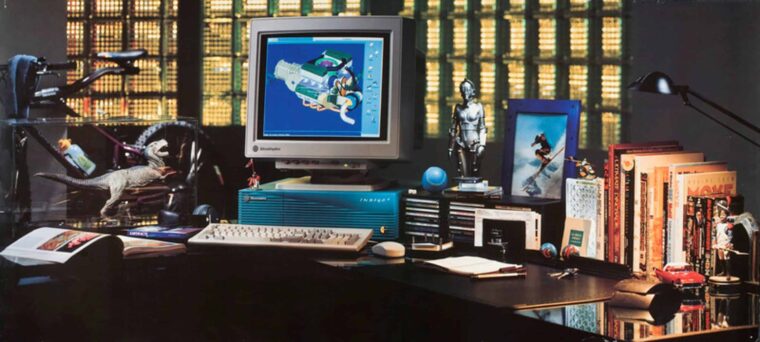
Throughout the 1980s and 1990s, SGI embodied the cutting edge of computing. The company was a leader in high-performance graphics, producing hardware and software that excelled at rendering complex three-dimensional images. Notably, Pixar used SGI Indigo2 workstations to create Toy Story, the first fully computer-animated feature film.
The building functioned as an executive briefing center and showroom, a place where clients and partners could experience the future of computing firsthand. In many ways, it was both a workplace and a stage set for technological possibility.
Designed by STUDIOS Architecture of San Francisco, the project, known as the “Shoreline Entry Site,” was positioned at one of the most prominent remaining sites in the Valley. Thousands of commuters passing along the nearby freeway would see it daily. SGI recognized this visibility as an opportunity. The building would not just house employees; it would communicate the company’s values to the broader public.
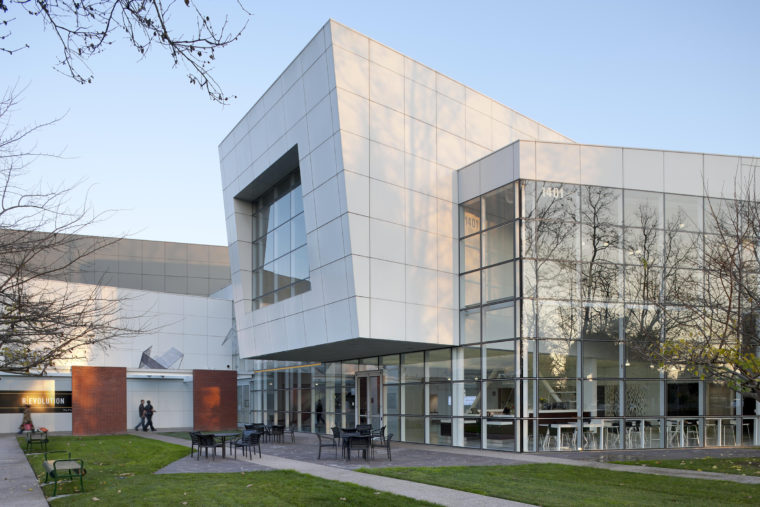
At the core of the architectural vision was a powerful idea: openness. SGI wanted to be seen as accessible, both visually and psychologically. The building reflects this in multiple ways. Along the western façade, a large glass “bay window” reveals glimpses of the interior to passersby, offering what architects described as a “high-speed glimpse” into the life of the company. This transparency also shaped how the building functioned. Running through the building is a central circulation spine, connecting stairs, services, and shared spaces. The result is a space that feels less like a sealed corporate facility and more like a small, interconnected urban environment.
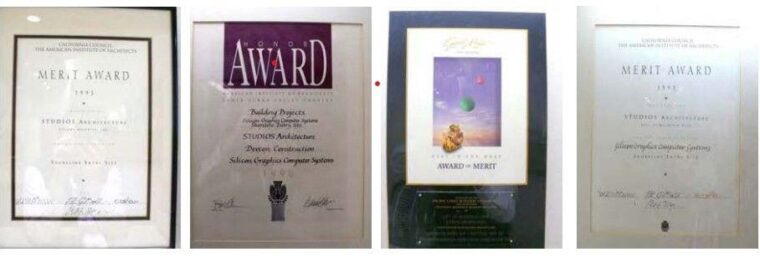
The building was recognized and celebrated by the architectural community and received multiple prestigious awards in 1995, including a Merit Award for Excellence in Design from the American Institute of Architects California Council and an Honor Award from the AIA Santa Clara Valley Chapter. It also earned a Gold Nugget Award of Merit from the Pacific Coast Builders Conference, further cementing its status as one of the most important architectural projects in the region at the time.
Architectural critic James S. Russell later described the building as a turning point for Silicon Valley. Writing in The Power of the Pragmatic, he argued that the project marked “the first real departure from the Valley’s reflective-glass anonymity.” Instead of blending in, the building stood out, sculptural, expressive, and intentional.
Like many Silicon Valley stories, SGI’s trajectory was not linear. After a period of rapid growth and influence, the company declined in the early 2000s, overtaken by shifts in the industry and the commoditization of graphics technology. The building it left behind, however, remains a physical artifact of a particular moment in the Valley’s evolution.
In 2002, that building began a new chapter when it was acquired by the Computer History Museum. The transition was fitting. A structure originally designed to showcase the future of computing became a place dedicated to preserving and presenting its past, present, and future. Today, the Museum houses one of the most comprehensive collections of computing artifacts in the world, spanning from ancient calculating devices to cutting-edge artificial intelligence systems.
In a sense, the building’s original design intent still lives on. Its openness, transparency, and emphasis on communication align naturally with the Museum’s mission to make computing history accessible to the public. The same glass walls that once revealed the inner workings of SGI now invite visitors to explore the broader story of technology.
The building stands as a reminder of Silicon Valley’s defining rhythm: ambition, innovation, rise, disruption, and reinvention. SGI’s story, its groundbreaking contributions, its prominence, and its eventual decline, is echoed in countless other companies that have shaped the region.
And yet the building endures, adapted for a new purpose while preserving its original vision. More than the museum’s home, it is its largest artifact: a living piece of Silicon Valley history.
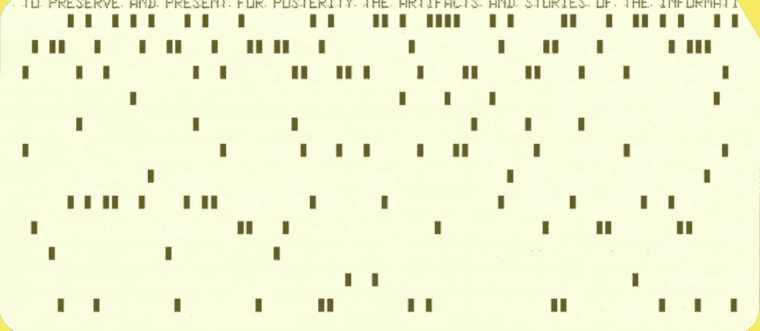
CHM has made its own mark on the iconic 1401 building. The Museum’s lobby floor is inspired by punched cards, which dominated data processing from the 1930s to the 1970s. The white floor represents the card, while the dark gray represents the punched holes. The holes comprise individual pieces of data that come together to form a message.
Hidden in the lobby floor is the Museum’s original mission statement: “To preserve and present for posterity the artifacts and stories of the information age.” Although our mission has evolved over the years, the lobby floor serves as a reminder of our enduring commitment to preserving and sharing computing history.
Image: The punched card floor in CHM’s lobby.
Become part of the movement transforming how people understand our computing history, digital present, and future impact on humanity by donating today.
Donate
Join the Power On campaign! See what donor support has achieved and help us finish strong by June 30.